The Evolution Of Vaping
July 29, 2026

Ever wondered how far back in history your favourite vape actually goes? The surprising answer is actually a lot further than you may think! Read on for a deep dive into the evolution of vaping, from when vaping was just a concept in the 1960`s to the high tech vape kits of the current day.
When did vaping originate?
The origins of vaping can be traced all the way back to 1927 when American inventor, Joseph Robinson patented an “electronic vaporiser” to be used for inhaling medicinal compounds. This product never actually reached the market and wasn't intended to be used as a way to stop smoking, but as a medium to get medicines into the system.
The concept of the e-cigarette can be traced back to 1963, when inventor Herbert Gilbert applied for a patent for a “smokeless non tobacco cigarette”. This new patent described replacing burning tobacco with a moist, heated, nicotine-free and flavoured air. Unfortunately, Gilbert's invention never reached commercialisation because the ill effects of smoking were not fully understood at that point, so smoking remained the fashionable option. In 2013 Herbert Gilbert pointed out that the e-cigarettes beginning to emerge followed the basic principles of his patent.
Early modern day vaping
Chinese pharmacist Hon Lik invented the first modern day e-cigarettes. Hon wanted an effective way to help quit smoking after his father died of lung cancer associated with heavy smoking. In 2001 he realised using resistance heating effectively created a smoke like vapour from a pressurised jet of liquid.
Hon Lik`s patent for the e-cigarette was officially registered in 2003 and was introduced to the Chinese market in 2004. After great success in China, e-cigarettes were brought into US and European countries from 2006.
Early e-cig advancements
Vapers began customising their devices adding things such as:
- In 2007 the cartomiser was invented by British brothers Tariq and Umer Sheikh. This allowed the heating coil to be integrated into the e-liquid chamber. Most vape brands quickly copied this innovative design as it allowed e-cigarettes to be smaller and less complicated.
- At the same time e-cig users began to customise their e-cigarettes, creating and adding mods to boost the capabilities of their device. Mods originally started as vapers just tinkering at home with their e-cigarette and eventually became available as extra add-on pieces like Ted and Matt Rodgers` 2008 “Screwdriver” mod which greatly increased the battery capacity, allowing people to vape for hours uninterrupted.
Customisable e-cigarettes
By 2008 vape manufacturers were creating devices with individual components, allowing for a never before seen level of customisation. This included variable voltage batteries and clearatomisers, which could helpfully show your visible e-liquid levels.
Vaping in the 2010`s
During the 2010`s the demand for vapes skyrocketed! They attracted lots of media attention and became the top quit smoking aid. International tobacco companies got involved and began producing a number of well known vape brands like Vype(now Vuse), and Blu.
The major tobacco companies weren't the only players though, this era saw the launch and great success of famous independent brands such as Juul.
At the same time as this, vape devices were becoming increasingly more high-tech, as features like display screens, adjustable airflow, and variable wattage were added to sub ohm kits particularly.
Vaping became a distinct identity in the 2010`s as many different competitive cloud chasing events were established annually across the globe. Vapers would gather together to see who could exhale the densest clouds with the winners receiving vaping fame as well as (sometimes) cash prizes.
Today
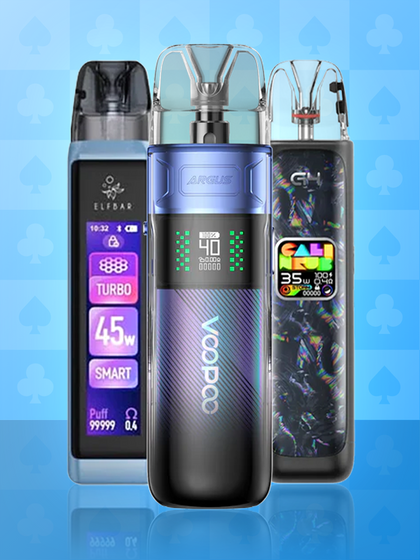
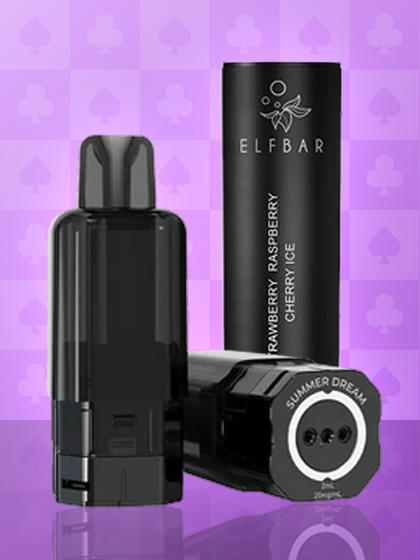
Last but not least are the vape kits of today. With more brands than ever to choose from vaping is in a great place! Brands like Elfbar and Lost Mary have dominated this era of vaping. These brands have brought the pre-filled pod kit to the forefront of modern vaping, with an emphasis on pocket sized, portable convenience.
Competitive vaping events now attract international audiences, as well as both major and independent brands plugging their products.
Today, over 100 million people worldwide vape, a far cry from when it was just an abstract concept in the 1960`s.